

โทรศัพท์ติดต่อ DMC : ค้นหาหนังสือธรรมะ หน้า 598 / 615
หน้าหนังสือทั้งหมด
160
Abstention from Killing in Buddhism
4.1 Abstention from killing
Evil actions can be abstained from in any of the following three different ways:
1. abstention on the spur of the moment [sampattauirati];
2. abstention by having requested
This text discusses various ways one can abstain from killing, highlighting three methods: spontaneous abstention, preemptive abstention through the Five Precepts, and transcendent abstention. Illustr
161
The Power of Right Action and Compassion
the snake started to crush him in his coils, he thought again of killing the snake, but remembering his Precepts he threw down the knife. He thought to himself, that if he should die, at least he woul
This text illustrates the significance of Right Action in Buddhist practice, showcasing a layman's resolute adherence to Precepts when confronted by a snake. The narrative emphasizes that true abstent
162
Teachings of the Buddha on Nobility and Right Action
ter asking all the monks’ names, the Buddha would ask his. The Buddha knew what he was thinking and asked the man his name. “Ariya” replied the man. In fact, the Buddah didn’t need to be told the man’
In this text, the Buddha teaches that true nobility is defined by one's actions towards living beings. Ariya learns that harming others disqualifies him from being 'noble', resulting in his attainment
163
The Story of Khujutara and Khema
money any more. She used the whole 1,000 kahapanas to buy flowers for Sammavadi and the courtesans. Seeing that there were more flowers than usual, the courtesans asked Khujutara whether the king had
This text narrates the story of Khujutara, who uses all her money for good after understanding the teachings of the Buddha about the consequences of embezzlement. Her change illustrates the concepts o
167
Understanding Wrong Livelihood and Its Varieties
take advantage of the measure not being completely filled.
Again such behaviour is dishonest.
Moreover, surveyors in charge of measuring land for a buyer, if they are dishonest or corrupt and don’t ge
This text delves into the concept of Wrong Livelihood, highlighting dishonest practices such as corrupt land measurement, bribery, and fraudulent transactions. It illustrates various forms of deceptio
169
Understanding Right Livelihood and Right Effort in Buddhism
but the bodhisattva urged him on. The merchant, realizing what he had lost through his greed choked up blood. It was at this time that he vowed to get his revenge on the bodhisattva in every future li
The text discusses the principles of Right Livelihood and Right Effort in Buddhism, exemplified by the bodhisattva's encounter with a greedy merchant. The merchant's greed leads to his demise, contras
174
Understanding Right Effort and Mindfulness in Buddhism
Hearing the Lord Buddha’s explanation, the Brahmin attained "Stream-Entry".
This is an example of making effort representative of the third category of Right Effort on the worldly level arising from
ในบทเรียนนี้ เราจะทำความเข้าใจเกี่ยวกับ ความพยายามที่ถูกต้อง ร่วมทั้งการพัฒนาจิตสำนึกที่ถูกต้องในพระพุทธศาสนา โดยนำเสนอการรักษาคุณธรรมที่สงบ และการเจริญสติใน 4 ประการ เช่น การตั้งอยู่ในกาย อารมณ์ จิต
175
Monitoring and Discretional Mindfulness
7.1 Monitoring Mindfulness
This form of mindfulness is mindfulness that is constantly monitoring the level of wholesomeness in the mind — never letting wholesomeness slip away from the mind and its in
Monitoring mindfulness involves a constant awareness of the wholesomeness in the mind, akin to a treasurer who tracks the assets of an emperor. It encompasses the recognition of various virtues essent
176
Understanding Right Concentration in Mindfulness
the emperor. Similarly, discretional mindfulness monitors
all mental phenomena — if it is unwholesome, then to try to
reduce it. If it is wholesome, to give it the chance to grow.
8. Right Concentrat
This section discusses the concept of Right Concentration in mindfulness, highlighting its two essential characteristics: supporting role and focusing role. It draws analogies to illustrate how concen
177
The Enlightenment of the Buddha’s First Disciple
The Enlightenment of the Buddha’s First Disciple
In preaching the Dhammackakapavattana Sutta, the Buddha revealed the Thirty-Seven Factors of Enlightenment [bodhipakkhiyadhamma], the Cycle of Depende
The Buddha, in the Dhammackakapavattana Sutta, introduced the Thirty-Seven Factors of Enlightenment, laying down the framework of the Four Noble Truths and the Cycle of Dependent Origination. Dhammaca
178
The Three Cycles of Examination in Buddhism
The Three Cycles of Examination comprise:
1. Saccānāna: Knowledge of the existence of each Noble Truth over which the Lord Buddha had unequaled personal knowledge and which he could teach to others wi
The Three Cycles of Examination define knowledge concerning the Noble Truths which the Lord Buddha taught. Saccānāna pertains to the knowledge of each truth’s existence; Kiccanānā addresses the necess
179
Dhammacakkapavattana Sutta: The Awakening of the Earth
Dhammacakkapavattana Sutta the whole of the Earth quaked and the waves of the ocean were whipped by strong winds and even Mount Sumeru bowed down its peak as if in humility to the teaching, with a sou
The Dhammacakkapavattana Sutta marked a monumental moment in Buddhist history, wherein the Earth quaked and the heavens resonated in response to the Buddha's teachings. This awe-inspiring event saw Mo
182
The Path to Nirvana: Konḍaṇṅa's Journey
It is interesting to consider that although the Buddha taught the same sermon to all five monks in the Pañcavaggiya, it was only Konḍaṇṅa who attained stream-entry as a result. The reason for the diff
In the Pañcavaggiya, the Buddha's teachings resonated uniquely with Konḍaṇṅa, who attained stream-entry due to his extensive past merits and dedication. Born as Mahākāla, a rice-farmer during Vipassi
185
Exploration of the Dhammacakkapavattana Sutta
Appendix A.
Dhammacakkapavattana Sutta
for Pursuers of Perfection
1. Introduction
In this Appendix we delve a little deeper into the meaning of the Dhammacakkapavattana Sutta. The Dhammacakkapava
In this appendix, we explore the Dhammacakkapavattana Sutta and its complexities for modern readers. The Sutta serves as a brief but profound insight, showing how the Dhamma represents a path to enlig
186
The Jewelled Wheel of the Universal Monarch
UPOSATHA DAYS (full-moon and new moon days). The Universal Monarch is endowed with seven forms of jewels by which he can rule the world:
1. A jewelled wheel;
2. A jewelled elephant;
3. A jewelled hors
This text discusses the essential attributes of the Jewelled Wheel bestowed upon the Universal Monarch. Among seven jewels, the Jewelled Wheel stands out for its double function as an invincible weapo
190
Bahiya and Konḍañña: Paths to Enlightenment
With those words alone, Bahiya was able to become an arahat. However, there are those, both in Thailand and abroad who look at examples such as that of Bahiya and come to the conclusion that you don't
This text delves into the spiritual journeys of Bahiya and Konḍañña, highlighting how Bahiya attained arahatship with minimal guidance, raising questions about the necessity of meditation for enlighte
192
The Importance of the Dhammacakkapavattana Sutta
the other teachings of the Buddha,the teachings of the arahants and the teachings of distinguished Buddhist teachers down to the present time are simply enlargements upon the Dhammacakkapavattana Sutt
บทความนี้กล่าวถึงความสำคัญของพระธรรมจักรปวตนสูตรซึ่งเป็นแผนหลักในการเข้าถึงการตรัสรู้ ภาพรวมของสอนต่างๆ ของพระพุทธองค์และพระอรหันต์ ต่อจากนี้ยังบอกเราถึงสาเหตุการเผยแผ่พระธรรมจักรปวตนสูตร และการที่พระ
195
The Buddha's First Sermon: A Journey of Enlightenment
just passed away seven days ago and would now have to spend an exceedingly long lifetime in the formless Brahma-world. He might not even have the chance to hear the teachings of the next Buddha, let a
This excerpt discusses the profound moment in the Buddha's life when he sought to teach meditation after renouncing worldly comforts. He encountered obstacles as potential disciples Udaka Rāmaputta an
200
The Middle Way and the Four Noble Truths
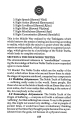
3. Right Speech [Sammā Vācā]
4. Right Action [Sammā Kammanta]
5. Right Livelihood [Sammā Ājīva]
6. Right Effort [Sammā Vāyāma]
7. Right Mindfulness [Sammā Sati]
8. Right Concentration [Sammā Samādhi]
This text discusses the Middle Way as taught by the Tathāgata, emphasizing the importance of Right Speech, Action, Livelihood, Effort, Mindfulness, and Concentration as a means to attain insight and e
202
The Noble Truth of the Origin of Suffering
all that way from the top of our head to the tips of our toes,
we are full of suffering — he had seen and known it for him-
self as a result of having the wherewithal to see and know
the nature of rea
The text delves into the Buddha's teachings on suffering, challenging ancient beliefs that linked suffering to divine punishment or fate. Instead, he identifies craving as the root cause of suffering,